

"Free and independent": new podcast episode online
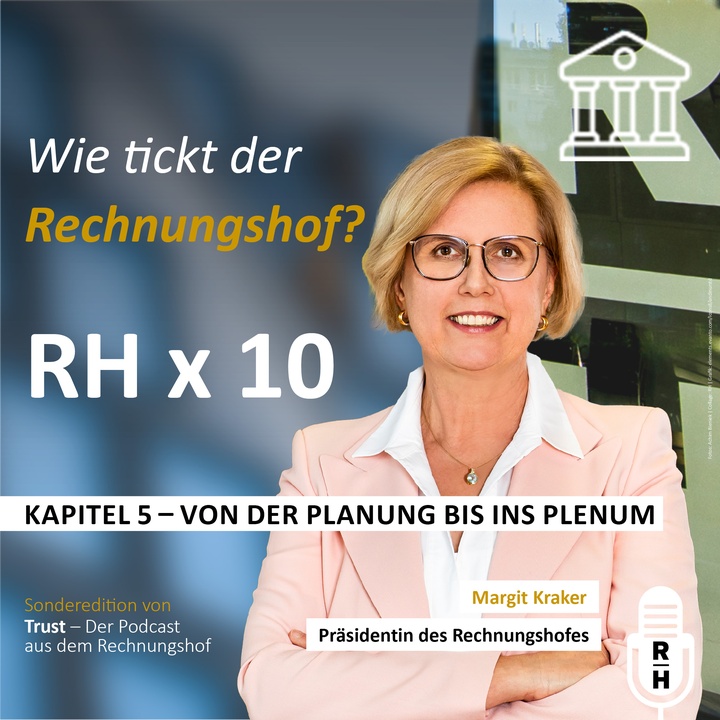
How does the Austrian Court of Audit (ACA) select its audits? Which entities is it authorized to audit? How do auditors conduct their audits in practice? What data analysis methods are used? What principles guide the editorial review of the ACA's reports? And: can audited entities comment on the audit findings and recommendations before the reports are published? These and other questions are explored in the latest episode of the special podcast series "ACA x 10".
ACA x 10: Chapter 5 – From Planning to the Plenary (in German)
Preventive effect
In total, around 5,800 entities fall within the Austrian Court of Audit’s audit mandate. The ACA strengthens its preventive effect by regularly auditing entities with very small financial volumes as well. The ACA independently determines which entities to audit. “The Austrian Court of Audit is entirely free and independent in its audit planning, as it is in all other aspects of its audit work. The only exceptions are audits that may be requested by representative bodies or governments. However, these account for only a small percentage of our audits,” says ACA President Margit Kraker. The podcast explores the criteria that guide the annual preparation of the ACA's audit programme. Encouraging citizens to submit suggestions for audits has always been, and continues to be, a particular priority for President Margit Kraker. Published audit reports that have also originated from suggestions submitted by citizens are available here.
Connecting public sector audit institutions
ACA President also explains how public sector audit institutions in Austria cooperate and coordinate their activities, and outlines the ACA's role in relation to the provincial courts of audit. Auditors themselves also provide insights into how they conduct audits in practice. The podcast further explores legal issues that may arise in the course of the audit work. In certain cases, for example, it is necessary to establish whether the ACA has the legal authority to conduct an audit, in other words, whether the audit falls within its audit remit. The episode also addresses how the ACA can respond to obstacles or interference encountered during an audit.
Fairness through the right to be heard
“No one is taken by surprise by an audit report,” explains Margit Kraker. As part of the procedure granting audited entities the right to be heard, they receive the draft audit report and are given the opportunity to submit their comments. Any comments received are reflected in substance in the final report. “It is important that audit reports are made public only once they have been finalized, and not beforehand,” says ACA President Margit Kraker.
You can find an overview of all released episodes of "ACA x 10" here.