

Funding conditions for heating system replacement: call for a targeted approach and predictability
In its report „Funding for the Transition to Climate-Friendly Heating Systems (pdf; in German)“ published today, the Austrian Court of Audit (ACA) calls for stability and reliability for the target groups of funding programmes. The audit was conducted at the federal, provincial (Vienna and Styria) and municipal levels. It revealed that funding recipients were permitted to receive subsidies from multiple schemes simultaneously, which could result in overfunding. The auditors also criticized the complex and fragmented landscape of funding schemes for heating system replacement. Furthermore, the funding programme for low-income households was not sufficiently targeted, while legal frameworks hindered decarbonisation – that is, the transition away from fossil fuels – in multi-storey residential buildings. The audit essentially spanned the years from 2020 through 2024. Certain aspects of the audit were also based on suggestions submitted by citizens through the ACA's citizen participation initiative.
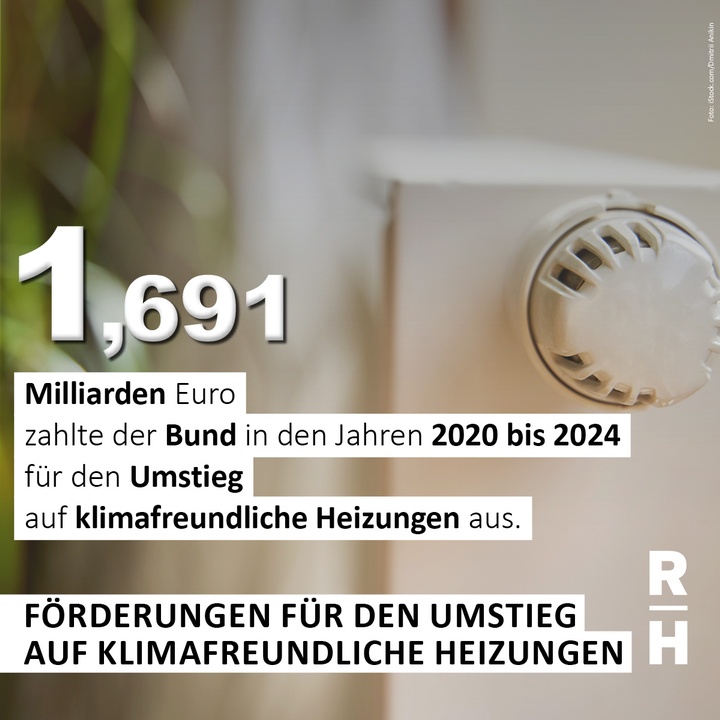
Between 2020 and 2024, the federal government disbursed a total of EUR 1.691 billion in funding to support the transition to climate-friendly heating systems. Of this amount, EUR 1.572 billion was allocated under the “Raus aus Öl und Gas” (“Phase-out of Oil and Gas”) funding scheme, while EUR 114.22 million was provided through the “Sauber Heizen für Alle” (“Clean Heating for All”) programme, specifically targeting low-income households. A total of 162,328 funding cases were recorded at the federal level. The rate at which fossil fuel-based heating systems were replaced increased significantly. During the same period, the Province of Styria disbursed EUR 65.53 million in funding (24,107 funding cases), while the Province of Vienna provided EUR 30.68 million (6,618 funding cases). In Styria, 13 of the 14 municipalities surveyed by the ACA also offered funding schemes for heating system replacement.
At the federal level, a further EUR 903.03 million had been earmarked to cover funding applications already registered for 2025.
Complex funding landscape and overfunding
The ACA criticizes the complex and fragmented landscape of funding schemes for heating system replacement. It considers the separate contact points, funding applications and administrative procedures, including the necessary oversight measures, at federal, provincial and municipal levels to be inefficient and burdensome for citizens. In view of developments in public finances across all levels of government, this also runs counter to the principle of economy in the use of public funds.
The ACA also critically notes that funding recipients were generally permitted to receive subsidies for heating system replacement from different levels of government simultaneously. As a result, from 2024 onwards, combined subsidies could exceed 100 per cent of the investment costs. The ACA recommends organizing funding schemes for heating system replacement according to the one-stop-shop principle, thereby eliminating duplication and the risk of overfunding.
Long-term plannning certainty for funding beneficiaries
Following years of generous funding, during which the maximum subsidy rates under the federal government's main funding programme rose to as much as 75 per cent, the available funds were exhausted ahead of schedule. The “Raus aus Öl und Gas” (“Phase-out of Oil and Gas”) funding programme was discontinued at the end of 2024. The federal government suspended further funding schemes in June 2025, before resuming them in November 2025 at reduced subsidy rates. After the available funds had once again been exhausted, the federal government announced plans in October 2026 to provide EUR 500 million in funding for heating system replacement and building renovation under the “Sanierungsoffensive 2027” (“Renovation Initiative 2027”), of which EUR 179 million was earmarked for heating system replacement.
In Styria, it was no longer possible to submit funding applications from the end of March 2025. By the end of the audited period, eight of the 13 municipalities surveyed that had offered funding had already discontinued or suspended their funding schemes. In this context, the ACA calls for stable funding conditions that are financially sustainable in the long term, as well as greater planning certainty for the intended beneficiaries.
Prioritizing those affected by energy poverty
The “Sauber Heizen für Alle” (“Clean Heating for All”) funding programme, specifically designed for low-income households, was available only to owners of single- or two-family houses or terraced houses. As a result, a large proportion of low-income households were effectively excluded from the programme. During the audited period, applications approved under this programme accounted for only four per cent (5,972 funding cases) of all federal subsidies for the transition to climate-friendly heating systems. In Vienna in particular, the programme supported only a small number of heating system replacements. The ACA recommends that any future funding schemes for heating system replacement give priority to those groups most affected by energy poverty. Households experiencing energy poverty predominantly live in rented accommodation in older, multi-storey residential buildings.
Only Six Per Cent of Funding Cases Involved Multi-Storey Residential Buildings
The transition to climate-friendly heating systems in multi-storey residential buildings is considerably more challenging than in single- and two-family houses, both from a technical perspective and, in particular, due to existing housing legislation.
Only six per cent (9,504 funding cases) of the applications approved by the Federal Ministry of Climate and Environmental Protection under the “Raus aus Öl und Gas” (“Phase-out of Oil and Gas”) programme concerned multi-storey residential buildings. The ACA recommends the prompt development of legal solutions to facilitate thermal and energy-efficiency renovations, including heating system replacement, in multi-storey residential buildings.
Need for a decarbonization plan
Achieving the decarbonization of Austria's existing heating systems by 2040, as required to reach climate neutrality, represents a major challenge given the large number of fossil fuel-based heating systems still in use. The ACA recommends that a phased timetable for decarbonizing heating systems across Austria be prepared without delay and that steps be taken to establish it in law. The good news is that greenhouse gas emissions from the buildings sector declined significantly during the audited period. According to the Environment Agency Austria, 50 to 60 per cent of this reduction was attributable to the transition from fossil fuel-based to climate-friendly heating systems.
- pdf Datei:
- 1,877.5 KB
- Umfang:
- 116 Seiten
Report: Funding for the Transition to Climate-Friendly Heating Systems (in German)
From May and October 2025, the Austrian Court of Audit (ACA) carried out an audit of the funding for the transition to climate-friendly heating systems at the Federal Ministry of Agriculture and Forestry, Climate and Environmental Protection, Regions and Water Management, the Federal Ministry of Justice, the Federal Ministry of Economy, Energy and Tourism, the provinces of Styria and Vienna, and the Climate and Energy Fund. The ACA also conducted an online survey of the 14 municipalities in Styria that fell within its audit remit. The audit aimed in particular to assess the legal framework, the funding landscape, funding conditions and administrative procedures, the financing and disbursement of funding, and the effectiveness of the funding schemes. The audited period spanned in particular the years from 2020 through 2024.